General Dentistry
Sleep Apnea Evaluation in Santa Maria
Judgment-Free Care for Every Age
Deciding If a Sleep Apnea Evaluation Is Your Next Step
You don’t have to be sure you have sleep apnea to ask about it. A dental evaluation is a calm first look at the signs in your sleep and your mouth. If those signs point to a concern, the next step is a doctor, who can confirm it with a sleep study.
Lots of people put off asking because they think snoring is just a quirk, or that feeling worn out is just part of being busy. Sometimes that’s true. But if a few of the signs below sound familiar, it’s worth bringing up at your next visit.
- Loud snoring most nights, not just when you have a cold
- Someone has noticed you stop breathing, choke, or gasp in your sleep
- You wake up tired even after a full night in bed
- Morning headaches or a dry mouth when you wake up
- Trouble focusing, or nodding off during quiet moments in the day
- Clenching or grinding your teeth at night
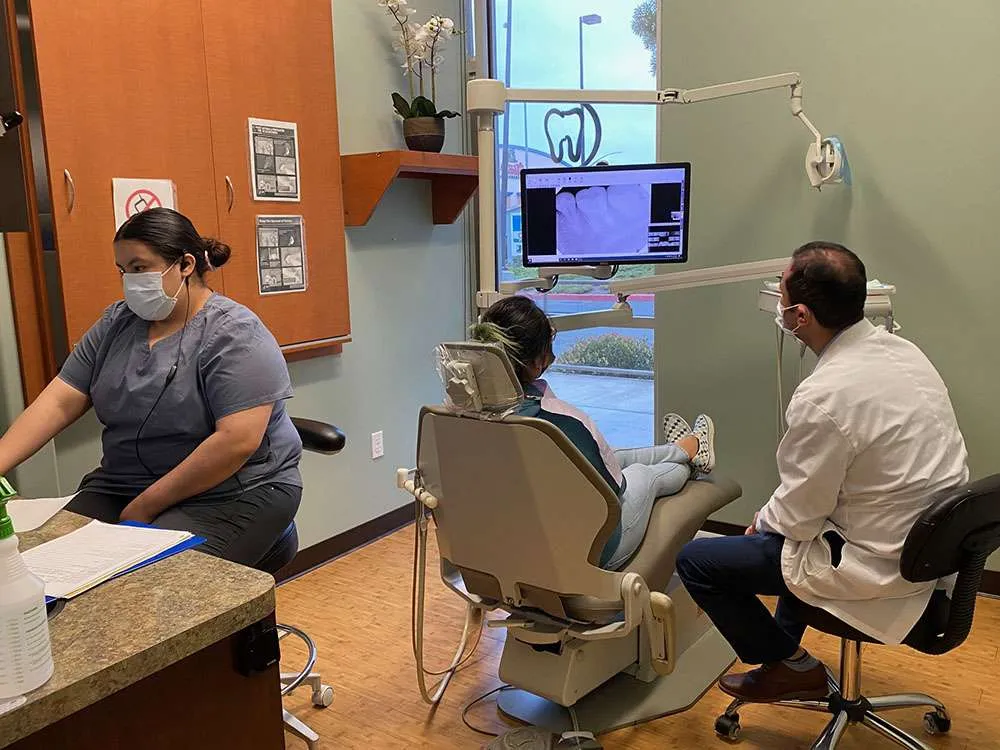
Your mouth can hold clues too. Worn-down teeth from nighttime grinding, a tongue with wavy edges along the sides, or a crowded, narrow space at the back of the throat can hint that your airway is working harder than it should while you sleep. These signs don’t prove anything on their own. They simply help tell you whether a closer look makes sense.
To be clear about what a dental evaluation can and can’t do: a dentist can screen for warning signs and talk them through with you, but only a physician can diagnose sleep apnea, usually with a sleep study. Think of the dental side as a thoughtful starting point, not the final word.
And sometimes this isn’t your next step at all. If you snore only during allergy season or when you’re sick, it may pass on its own. If you’ve already been diagnosed and your sleep doctor’s plan is working well, stick with it and keep them in the loop. If you’re falling asleep while driving or feel suddenly unwell, don’t wait for a dental visit. Call your doctor first. If your main trouble is jaw pain, clicking, or soreness when you chew, a TMJ/TMD evaluation may fit better, and that’s something we look at too.
If you’re somewhere in the middle, with a few signs and a lot of questions, that’s the perfect time to ask. Our team takes the time to understand what you’re noticing and explain what we see, so you leave with a clear sense of whether to talk to a doctor next.
Here's what a screening like this usually covers:
- Your sleep story. How loud and how often you snore, whether anyone has noticed pauses in your breathing, how rested you feel in the morning, and whether you doze off when you don't mean to.
- Your health picture. Medicines you take, recent weight changes, allergies or a stuffy nose, and how often you have alcohol close to bedtime, since these can change how your airway behaves at night.
- A short sleepiness questionnaire. These simple forms ask how likely you are to nod off in everyday moments, like reading or sitting in traffic. They turn a vague feeling of being tired into something easier to track.
- A look at your mouth and airway. Beyond the clues mentioned above, a dentist may check the size of your tongue and tonsils, how low your soft palate sits, how your jaws line up, and whether you tend to breathe through your mouth.
- Your dental history. Notes from past exams and recent x-rays can add context, like a pattern of wear that has slowly grown over the years.
What a Dental Sleep Apnea Evaluation Includes
A dental sleep apnea screening is mostly a conversation and a careful look. There’s no overnight test, no wires, and nothing that should hurt. Most of the value comes from putting the pieces of your sleep story side by side with what a dentist can see in your mouth.
You might wonder why a dentist cares about any of this. Your jaw, tongue, and bite shape the space air moves through while you sleep. A dentist spends a lot of time looking at exactly that space, so they’re often in a good spot to notice when something seems crowded or strained.
A little prep goes a long way. Before your visit, try to: ask your partner what they notice at night, or record your snoring with a phone app for a few nights. Jot down how you feel each morning for about a week. Bring a list of your medicines. If you’ve ever had a sleep study, bring those results too.
That recording is one of the most useful things you can bring. You can’t hear yourself sleep, and a few minutes of audio often says more than any description you can give.
By the end, you should have a clear, honest read on where things stand. If the signs are mild or point somewhere else, like seasonal allergies, you’ll hear that plainly. If they line up in a way that suggests sleep apnea, you’ll leave with a summary of what was found and a recommendation to see a physician, who can order a sleep study. Bringing that summary to your doctor gives them a head start.
Either way, the goal is the same. You walk out knowing more about your own sleep than when you walked in, with a next step that fits what’s really going on.
When Sleep Apnea Evaluation Can Wait
Not everyone who snores or feels tired needs a sleep apnea evaluation right now. You’ve already read about a few cases where you can skip it, like snoring that only shows up with allergies or a sleep plan that’s already working. Here are some more times when it’s perfectly fine to hold off.

- Your tiredness has a clear, short-term cause. A new baby, a stretch of night shifts, a move, or a crunch time at work can leave anyone running on empty. If you’re simply getting too few hours, more sleep is the first thing to try. If you’re back to full nights and still dragging, that’s when it’s worth asking.
- Your snoring follows a pattern you can spot. Some people only snore after a drink close to bedtime, after a big late dinner, or when they sleep flat on their back. If it fades on other nights and nobody hears pauses or gasps, it may be plain snoring and nothing more.
- Your doctor has already ordered a sleep study. If a test is on the calendar, let it happen first. A sleep study tells you far more than a dental screening can. If your doctor later brings up a dental option, you can bring those results with you.
- You just started a new medicine and feel groggy. Some medicines can make you sleepy or change how you sleep. Your prescriber is the best person to ask first.
- It’s your child who snores. A child’s sleep and breathing are best checked first by their pediatrician, who knows their growth and health history.
- Your snoring is soft and you wake up rested. Light snoring with no breathing pauses, no morning headaches, and no daytime fog usually isn’t a reason for a special visit.
Waiting doesn’t mean forgetting about it. Keep using the phone recording and morning notes described earlier for a few more weeks. It takes almost no effort, and it turns a fuzzy worry into something you can see. If the pattern looks the same at your next routine exam, just bring it up then. You don’t need a separate appointment to ask a question.
Waiting stops making sense when the picture changes. Maybe you’ve caught up on sleep and still feel worn out. Maybe the snoring keeps going on nights without a drink, or your partner starts noticing pauses and gasps. Any of these means the short-term explanation probably doesn’t fit anymore, and a closer look is a sensible next step.
If none of that sounds like you, holding off is a fair choice. Good care means doing what fits your situation right now, not booking a visit just to be thorough. Your sleep will tell you a lot if you give it a little time and pay attention.
Sleep Apnea and TMJ/TMD: Related Concerns, One Visit
Say you wake up with a sore jaw and a dull headache, and you still feel tired. Is that a sleep problem or a jaw problem? It’s often hard to tell, and sometimes it’s a little of both. That’s why it helps to talk about both with one team that understands how the pieces fit together.
Your jaw joints, chewing muscles, tongue, and airway all sit close together and work as a team. When one part is under strain, the others tend to feel it. Nighttime clenching, which showed up in the earlier list of signs, is a good example. It puts steady pressure on the jaw joint and muscles for hours. It also sometimes shows up alongside breathing trouble during sleep. Researchers are still learning exactly how the two connect, but they overlap often enough that looking at only one can leave part of the story untold.
Here are some signs that could point to sleep, your jaw, or both:
01
A sore or tight jaw when you wake up, especially near your ears or cheeks
02
Headaches around your temples first thing in the morning
03
Clicking, popping, or a stiff feeling when you open wide or chew
04
Teeth that feel tender in the morning for no clear reason
05
Waking up unrested even when the night felt long enough
Think about what happens when only one side gets attention. If you treat jaw soreness and never ask about sleep, you might miss why you’re clenching in the first place. If you focus only on snoring, a jaw that’s already strained can go unnoticed. When both are on the table, the picture gets clearer, and the next step fits what’s really going on.
You don’t have to figure out which one it is before you call. Brilla Dental Group offers both sleep apnea evaluation and TMJ/TMD evaluation and therapy. Just tell us what you’re noticing. Bring the snoring recording and morning notes from earlier, and mention any jaw aches, clicks, or headaches too. Our dentists take time to understand your concerns, explain what they see, and walk through your options so you can make a choice that feels right.
The same honest line applies here as everywhere on this page. If the signs point toward sleep apnea, a physician and a sleep study are the next step. If your jaw turns out to be the bigger concern, TMJ/TMD care is something we provide here.
There’s one more piece worth knowing. Years of nighttime grinding can slowly wear teeth down, chip edges, or leave them feeling sensitive. If that’s part of your story, we can also talk about restoring worn teeth with options like dental bonding or crowns. The goal is a smile that looks natural and holds up to everyday life. It’s one of the quiet benefits of having general, restorative, and cosmetic care under one roof at our office on North Broadway in Santa Maria.
Oral Appliance Therapy as a CPAP Alternative
If sleep apnea is confirmed, the treatment most people hear about first is CPAP. That’s a small machine that gently pushes air through a mask while you sleep to keep your airway open. It works well for many people. But some find the mask hard to get used to, feel boxed in by it, or struggle to pack it for travel. That’s where an oral appliance often enters the conversation.
An oral appliance is a custom mouthpiece, a bit like a sports mouth guard or a retainer, that you wear only at night. Most styles hold your lower jaw slightly forward. That small shift helps keep your tongue and the soft tissue at the back of your throat from falling back and narrowing your airway while you sleep. There’s no hose, no mask, and no sound.
It isn’t the right choice for everyone. A sleep physician decides which treatment fits, based on your sleep study, which is why the earlier sections point you there first. In general, an oral appliance tends to come up when:
- Your sleep apnea is mild or moderate rather than severe
- You’ve tried CPAP and simply can’t stick with it
- You’d like a quieter, more portable option for travel or camping
- You have enough healthy teeth to hold the appliance steady
That last point is where your mouth really matters. An appliance rests on your teeth and leans on your jaw for hours every night. Loose teeth, gum disease, missing teeth, or a jaw that’s already sore can make it uncomfortable or less steady. Since nighttime clenching and jaw strain often show up alongside sleep trouble, as covered in the TMJ/TMD section, it’s worth knowing how your jaw is doing before you commit to holding it forward every night.
It also helps to know what living with one can feel like. Some people notice mild jaw tightness or extra saliva in the first weeks. Over a long stretch, holding the jaw forward can slowly shift how your bite comes together. Many people adjust just fine. Still, these are good reasons to keep up with regular dental visits while you use one. And because comfort isn’t proof that it’s working, your doctor will usually want to confirm the results with follow-up testing.
This is where a dental point of view earns its place. Before you choose between a mask and a mouthpiece, it’s worth having someone look closely at the teeth, gums, and jaw that would be doing the work. Our team can walk you through what we see and explain how your mouth might handle an appliance, so you can bring clear, practical questions back to your doctor and pick the path you’re most likely to stay with.
The best treatment is the one you’ll use, night after night, in a way that feels comfortable and fits your life.
Frequently Asked Questions
Frequently Asked Questions
What should I bring to a sleep apnea screening?
Bring a recording of your snoring, a week of morning notes on how you feel, and a list of your medicines. If you’ve ever had a sleep study done, bring those results too. This gives your dentist real details to work with instead of guesses, and it helps them decide whether a doctor referral makes sense.
How long do people usually wait before getting checked for sleep problems?
Many people put it off far longer than they should, sometimes for years, because they assume tiredness is just part of a busy life. If snoring or daytime fog keeps showing up even after you catch up on sleep, that’s a sign to stop waiting and bring it up at your next visit.
Can I just ask about sleep apnea during a regular dental checkup?
Yes, you don’t need a separate appointment to bring it up. If you’ve been tracking snoring or morning tiredness and the pattern looks the same at your next routine exam, just mention it then and your dentist can take a closer look.
Schedule Your Dental Appointment Today
Ready to get comprehensive care for your family? Visit Brilla Dental Group on North Broadway.
Visit Us
1846 N Broadway #B, Santa Maria, CA 93454
Languages
English | Español
Office Hours
Monday – Thursday: 7:30 AM – 4:30 PM
Friday: 7:30 AM – 4:00 PM
Saturday – Sunday: Closed