General Dentistry
TMJ/TMD Evaluation in Santa Maria
Modern Care. Artistic Precision. Exceptional Comfort.
Signs Your Jaw Pain Needs a Professional Look
A jaw that clicks now and then but never hurts often doesn’t need a visit. Pain that keeps coming back, a jaw that catches or locks, trouble opening wide, or a bite that suddenly feels off are all good reasons to get a TMJ/TMD evaluation. Patterns matter more than any one bad day.
Your jaw joint works hard. It moves every time you talk, chew, yawn, or swallow, so it’s normal for it to feel a little tired after a long day or a tough steak. The question isn’t whether your jaw ever feels odd. It’s whether something has changed and stuck around.
Here are the signs that tell us a TMJ/TMD evaluation is worth your time:
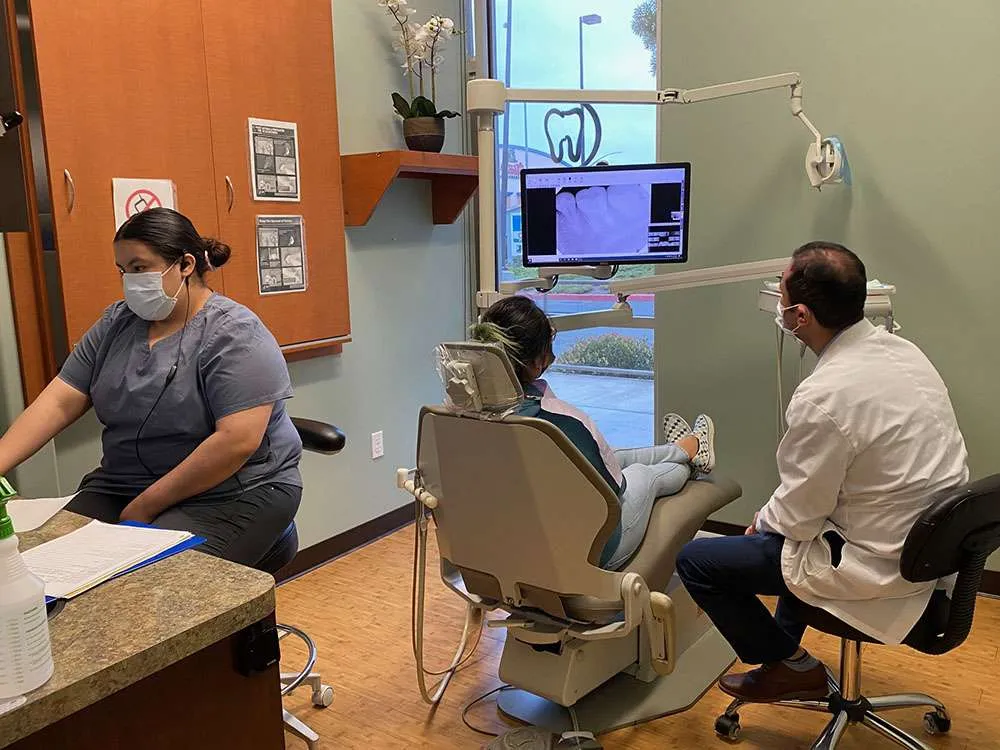
- Pain that keeps coming back. Soreness in front of your ear, along your jaw, or in your cheek muscles that shows up week after week isn’t just a long day.
- Clicking or popping that hurts. A sound by itself is one thing. A sound that comes with pain is different.
- A jaw that catches, sticks, or locks. If your mouth gets stuck partway open or closed, even for a moment, that’s worth checking.
- Trouble opening wide. Struggling to bite into a sandwich or feeling a limit when you yawn can mean the joint isn’t moving freely.
- Your bite feels different. If your teeth don’t seem to meet the way they used to, the joint or muscles may be part of the reason.
- Morning soreness or headaches. Waking up with a tight jaw, sore temples, or a dull headache can point to clenching or grinding at night.
- Worn, chipped, or flattened teeth. Grinding leaves marks on your teeth long before you notice it in your jaw.
- Ear stuffiness or ringing with no ear problem. The jaw joint sits right next to your ear, so jaw trouble can feel like an ear issue.
Picture this. You notice your jaw aches most mornings, and lately your partner says you grind in your sleep. You’ve also started chewing on one side without thinking about it. None of these alone feels like a big deal. Together, they tell a clear story, and that’s the kind of pattern a careful exam can sort out.
Now the honest part. Plenty of people have a jaw that clicks with no pain, no locking, and no trouble chewing. If that’s you, and nothing has changed, you may not need a visit just for that. Bring it up at your next routine exam so it’s on record and we can watch it over time. The same goes for soreness after a dental visit or a long chew that fades in a day or two.
What tips the scale is change and staying power. Pain that’s getting worse, new limits on how you move your jaw, or symptoms that start to affect how you eat, sleep, or focus are signs you don’t have to wait out. Our dentists take time to listen to what you’re feeling, explain what’s going on, and walk you through your options so you can decide what’s right for you.
Sometimes jaw symptoms overlap with other concerns. Nighttime clenching can go hand in hand with poor sleep, which is why we also offer a sleep apnea evaluation. If your exam points toward care, TMJ/TMD therapy is available here too, so your next step stays under one roof.
What Happens During a TMJ/TMD Evaluation
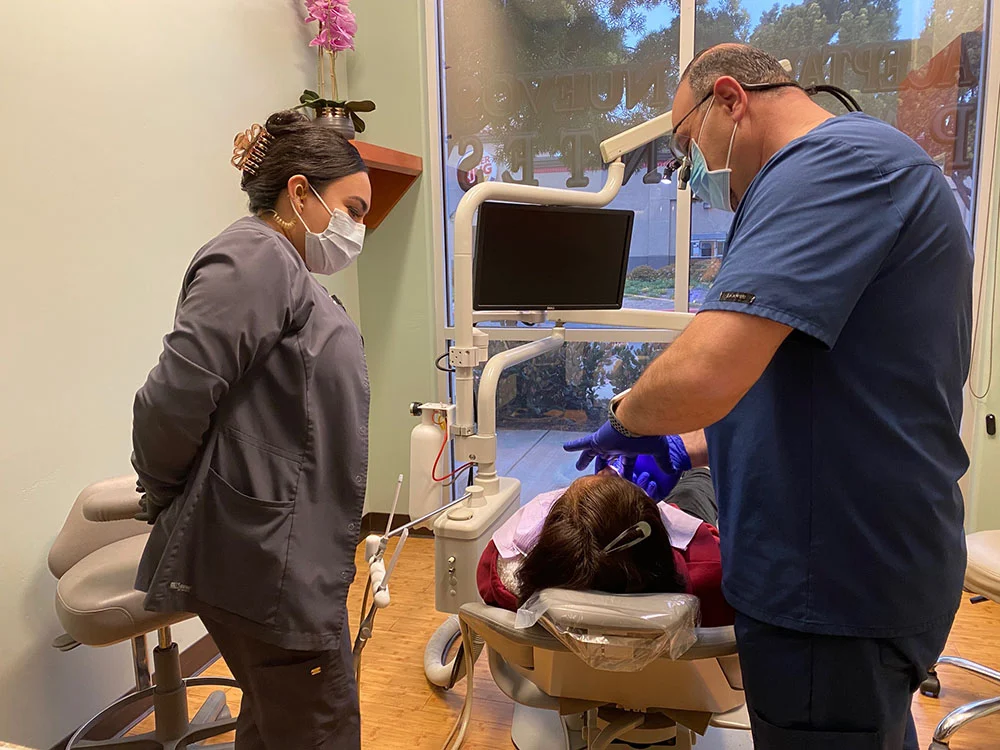
A TMJ/TMD evaluation is a conversation and a gentle, hands-on check of how your jaw joints, jaw muscles, and bite work together. It’s not a procedure. The whole point is to figure out where your discomfort is really coming from, because that answer shapes everything that comes after.
Every dentist does things a little differently, but a careful evaluation usually covers these steps:
- Your story. When did it start? What makes it better or worse? Do you clench when you’re stressed, chew gum a lot, or wake up sore? Your answers often point the way before anyone touches your jaw.
- Watching your jaw move. You’ll open, close, and slide your jaw side to side. How wide you can open, and whether your jaw drifts to one side as it moves, tells a lot about how the joint is working.
- Feeling and listening to the joint. Light fingertips just in front of your ears can pick up clicks, pops, or a grating feel as you move.
- Checking the muscles. Gentle pressure on your cheeks, temples, and the sides of your neck helps find tight or tender spots. You stay in control the whole time, so speak up if anything feels like too much.
- Looking at your teeth and bite. Wear patterns, chips, and how your teeth meet can show clenching or grinding you didn’t know you had.
- Imaging, only if it’s needed. If the exam hints at changes inside the joint, x-rays or other imaging may be suggested. Many people don’t need it at all.
Why go step by step instead of jumping straight to a fix? Jaw pain can come from tired, overworked muscles, from the joint itself, from your bite, or from a habit like nighttime grinding. Two people can describe the exact same ache and need very different care. One might have muscles that are simply worn out from clenching. The other might have a joint that isn’t gliding smoothly. Treating the wrong one wastes your time and doesn’t bring relief.
A little prep goes a long way. For a week or so before your visit, jot down when your jaw hurts, what you were doing, and how bad it felt on a scale of 1 to 10. Note any headaches, ear stuffiness, or locking. Ask anyone who shares your room if they hear you grind at night. Bring a list of any medicines you take.
Most people are surprised by how relaxed it feels. There’s no drilling and nothing you need to brace for. You’re mostly talking, opening and closing, and letting the dentist feel how things move.
By the end, you should walk out understanding what’s most likely behind your symptoms and what your options are, in plain words. Sometimes the answer is simple: softer foods for a while, warm compresses, and paying attention to daytime clenching. Sometimes it points toward more tailored care. Either way, you’ll be choosing based on a clear picture of your own jaw, not a guess.
Evaluation Comes Before Treatment, Not With It
When your jaw hurts, you want it to stop. That’s why it’s tempting to grab a store-bought mouth guard, or to say yes to the first fix someone offers. But a fix aimed at the wrong cause can leave you sore, out of pocket, and right back where you started. The evaluation is how you find out what you’re treating.
Here’s a simple way to think about TMJ care. Some steps are easy to undo, like resting your jaw, warm compresses, softer foods, or a custom guard you can take out. Other steps change your teeth or bite for good, like reshaping tooth surfaces or major bite work. Changes you can’t take back should never come first. They should never come before someone has a clear picture of what’s going on in your joint and muscles. Gentle, reversible care gives your jaw a chance to settle and shows what helps.

A good evaluation also protects you from paying for something you don’t need. If the problem is mostly tired muscles from daytime clenching, a costly appliance may not be the answer. If the joint itself isn’t moving smoothly, a quick over-the-counter guard won’t fix that, and a poorly fitting one can even make things feel worse.
Before you agree to any TMJ treatment, anywhere, these are fair questions to ask:
01
What do you think is causing my pain: muscles, the joint, my bite, or a habit?
02
Is this step reversible if it doesn’t help?
03
What simpler options can I try first?
04
How will we know if it’s working, and when should we check again?
05
What does the full plan cost, not just the first visit?
On cost, it helps to know how TMJ care is usually priced. The evaluation is often billed on its own, separate from any treatment that follows. What drives the total up or down is mostly what the exam finds: whether imaging is needed, whether a custom appliance is part of the plan, and how many follow-up visits it takes to get you comfortable. Coverage varies a lot, too. Some plans treat jaw care as dental, some as medical, and some limit it. Our team offers insurance and billing assistance, so you can understand what your plan may cover before you commit to anything.
Once you know the real source, the next step gets much easier. Because both the evaluation and TMJ/TMD therapy happen at our Santa Maria office on North Broadway, you won’t have to start over with a new provider or repeat your story. Our dentists take time to explain what they found and talk through your options, so the care that follows is tailored to your jaw, aimed at the right cause, and built to bring you lasting comfort.

When You Can Wait and When to Get Checked
Not every jaw ache needs a visit this week. Some things are fine to watch. Others are worth booking soon. A few shouldn’t wait at all. Here’s how to tell which group you’re in.
It’s usually fine to wait and watch when your symptoms have a clear reason and are getting better on their own. A sore jaw after a long dental visit, a big chewy meal, or a stressful week that eased up often settles without help. So does a click you’ve had for years that never hurts or gets in the way. In those cases, pay attention. If it fades and stays gone, you’re likely fine. Mention it at your next routine exam so it’s on record.
Book an evaluation soon when things aren’t fading, or when they keep coming back. The signs listed earlier on this page are your guide. The pattern to watch is staying power. If you’ve gone from “that’s odd” to planning meals around your jaw, it’s time.
There are also a few times when an evaluation should come first, even if your symptoms feel mild:
- Your bite changed after new dental work. If a new crown, filling, or denture makes your teeth meet differently and your jaw starts to ache, call the office that did the work. It’s often a simple adjustment.
- You’re about to start bigger dental work. If you’re planning braces, clear aligners, dental implants, or a full-mouth reconstruction and your jaw already bothers you, say so up front. Knowing how your joint and muscles behave helps the plan fit you.
- You’ve been managing it alone for a while. If you’ve tried a store-bought guard or kept avoiding certain foods and it still isn’t better, a careful look can show what you’re missing.
Some situations shouldn’t wait for a routine opening:
- Your jaw is stuck open or stuck closed and won’t release.
- Jaw pain started after a fall, a sports hit, a car accident, or any blow to the face.
- You suddenly can’t bring your teeth together the way you normally do.
- Pain is severe, getting worse fast, or comes with swelling or fever.
For these, call right away. Our office offers emergency examinations and same-day emergency appointments, and facial trauma repair is among our services. If you’re hurt badly, can’t breathe or swallow easily, or have other injuries, go to the emergency room first.
If you’re still not sure which group you fit, that’s okay. You don’t need a perfect answer before you call. Tell us what you’ve noticed and how long it’s been going on. Our team can help you decide whether to book now or keep an eye on it. Either way, you’ll leave knowing your next step, and you won’t have to guess.
What Drives the Cost of a TMJ/TMD Evaluation
The cost of a TMJ/TMD evaluation mostly depends on how much the dentist needs to look at to find the cause. A jaw that clicks a little on one side takes less time to sort out than a jaw that locks, hurts on both sides, and comes with headaches and ear stuffiness. That’s why there isn’t one flat number that fits everyone. Before anything is done, you can always ask what your visit is likely to include.
Here’s what tends to shape the cost of the evaluation itself:
- The kind of visit. A jaw check added to a routine exam is different from a visit set aside just for your jaw. If you’re new to the practice, it may be part of a new patient consultation that also looks at your teeth and gums.
- How involved your symptoms are. One sore spot is quicker to check than pain in several places, locking, morning headaches, and bite changes all at once.
- Whether imaging is needed, and where. Digital x-rays can show your teeth and some of the bone around the joint. If the exam points to changes inside the joint that x-rays can’t show, you may be sent elsewhere for more detailed imaging. That outside facility usually bills on its own.
- Related checks. If nighttime clenching seems tied to poor sleep, a sleep apnea evaluation may be suggested. That’s a separate step, so ask about it as its own item.
- Records you already have. If you’ve had jaw x-rays or TMJ care somewhere else, bring the records or ask for them to be sent. It can help the dentist see how things have changed, and it may save you from repeat images.
Insurance is where most surprises happen. As covered above, plans don’t all handle jaw care the same way. A little prep helps. Bring both your dental and medical insurance cards. Ask whether your plan needs a referral or pre-approval for jaw-related visits. Also check whether the evaluation counts toward the number of exams your plan covers each year. Our team offers insurance and billing assistance, so you don’t have to work through the fine print by yourself.
When you call to book, these questions will give you a clear picture of the cost:
- Is this visit billed as a separate evaluation or as part of an exam?
- Will I likely need imaging, and would it be done here or somewhere else?
- Can you check my dental and medical benefits before my visit?
- If you suggest treatment, can I get a written estimate before we start?
Not sure yet if you even need an in-person visit? Brilla Dental Group offers virtual dental consultations. That can be an easy first step to talk through what you’re feeling before you plan your next move.
A careful evaluation isn’t the place to cut corners. It’s what keeps the rest of your care focused, so you only pay for what your jaw needs.
Frequently Asked Questions
Frequently Asked Questions
What does a TMJ flare up feel like?
A TMJ flare up usually feels like a dull ache in front of your ear, along your jaw, or in your cheek muscles that gets worse with chewing or talking. You may also notice stiffness when you first open your mouth in the morning, a jaw that feels tight by the end of the day, or a headache near your temples. Some people also feel ear stuffiness or a ringing sound, even though their ear itself is fine. If this kind of soreness keeps returning week after week instead of fading, it’s worth having it checked.
Will my insurance help cover a TMJ evaluation?
It depends on your plan, since some insurers treat jaw care as dental, some as medical, and some limit it altogether. This makes it hard to know your coverage until someone checks your specific benefits. Bring both your dental and medical insurance cards to your visit, and ask whether a referral or pre-approval is needed for jaw-related care. Our team offers insurance and billing assistance, so you don’t have to sort through the fine print on your own before your evaluation.
Schedule Your Dental Appointment Today
Ready to get comprehensive care for your family? Visit Brilla Dental Group on North Broadway.
Visit Us
1846 N Broadway #B, Santa Maria, CA 93454
Languages
English | Español
Office Hours
Monday – Thursday: 7:30 AM – 4:30 PM
Friday: 7:30 AM – 4:00 PM
Saturday – Sunday: Closed