
Services
General Dentistry in Santa Maria
Judgment-Free Care for Every Age
Family Cleanings & Exams: Warm, Preventative, and Comprehensive
We know that managing a household means your schedule is already packed. That’s why our approach to routine preventive care is designed to be as seamless and stress-free as possible. From gentle cleanings to thorough, comprehensive exams, we provide a warm, welcoming environment where patients of all ages feel completely at ease. To make quality dental care convenient for busy households, we offer multi-appointment scheduling—allowing you to book visits for your whole family in a single, streamlined trip.

- Sharp pain when biting down on something hard
- Gums that look red, puffy, or pull away from your teeth
- A filling or crown that feels loose or off
- Jaw soreness or clicking when you chew
- Visible dark spots or rough patches on a tooth
Signs You Need a General Dentistry Visit
Most people wait too long. Tooth pain is rarely the first sign; it’s usually the last one before something bigger.
So what should send you to the phone instead of the medicine cabinet? A few things come up again and again in our chair. Sensitivity to hot or cold that lingers past a few seconds. Bleeding gums when you brush, even if it seems minor. A dull ache around one tooth that comes and goes but never fully disappears. Bad breath that toothpaste and mints can’t seem to fix. A cracked or chipped tooth, even a small one you barely notice at first.
We see patients every week who put off a visit because the pain came and went, and they figured it wasn’t serious. Then one morning it’s not coming and going anymore. It’s just there, constant.
Kids are a little different. If your child complains that a tooth hurts when they eat something cold, or you notice a dark spot that wasn’t there a few months ago, don’t wait for it to get worse.
Not sure if what you’re feeling counts as urgent? That’s a common question. If it’s new, sharp, or getting worse day to day, it’s worth a look. If it’s mild and steady, it’s still worth checking before it becomes something more involved.
Same-Week Care for Santa Maria Families
A cracked tooth doesn’t wait for a convenient Tuesday. Neither does a toothache that shows up Sunday night and turns into gripping pain by Monday morning. We hear this from Santa Maria families constantly: someone bites down on something hard at a backyard barbecue on Broadway or a kid takes an elbow during a game at one of the local parks, and what was supposed to be a normal week turns into a scramble to find dental care fast.
That’s the kind of situation general dentistry is built to handle. Brilla Dental Group offers emergency dental care alongside everyday exams and cleanings, so a same-week problem doesn’t force you to choose between waiting it out and driving somewhere unfamiliar. Swelling, a lost filling, a broken tooth edge that’s cutting the inside of your cheek—these are the calls we expect and plan for.
Do Not Ignore Dental Pain
Dental pain rarely gets better on its own. Ignoring it can lead to bigger problems, longer treatment, and more time away from your daily routine. Even if it is not a true emergency, ongoing sensitivity or a damaged filling should be checked before the issue worsens.
Call When Something Feels Wrong
Busy schedules make it tempting to wait, but prompt care can prevent more serious dental problems. If something feels off, call our office, describe your symptoms, and our team will help determine how soon you should be seen.
When a Toothache Can Wait vs. When to Call Today
Not every twinge means an emergency. A little sensitivity to cold ice cream, gone in a few seconds? That’s usually nothing urgent. A mild ache that comes and goes after eating something sweet or cold often points to a small cavity or worn enamel, something we can look at during a regular visit rather than a rushed appointment.
But there’s a real difference between “annoying” and “get in here now.” If your tooth throbs on its own, with no trigger, especially at night when you’re lying down, that’s your body telling you the nerve is inflamed or infected. Swelling in your cheek or jaw, a bad taste that won’t go away, or pain so sharp you can’t chew on that side—those are signs of something that won’t fix itself.
Here’s a scenario we hear a lot. Someone bites into something hard, feels a jolt, then thinks it settled down over a day or two, only to wake up with a swollen face and a fever. That delay almost always makes treatment more involved, not less.
So how do you decide? Ask yourself three things. Does the pain wake you up? Is there visible swelling? Has it lasted more than two or three days? If you answered yes to any of those, don’t wait it out.
A dull ache after a new filling, or mild soreness from a bit of teeth grinding, can usually wait for your next cleaning. A pulsing pain, a loose tooth from an injury, or a gum abscess cannot. Trust that gut feeling—it’s usually right.
When in doubt, call our office. Our team can evaluate your symptoms and let you know whether you need same-day emergency care or if a routine visit is appropriate.
What Happens During Your First Exam
Walk through our doors for the first time and here’s what we’re not going to do: rush you into a chair and start poking around before you’ve even caught your breath. Our team takes time to understand what brought you in, what’s bothering you, or what you’re hoping to fix. That conversation shapes everything that comes after.
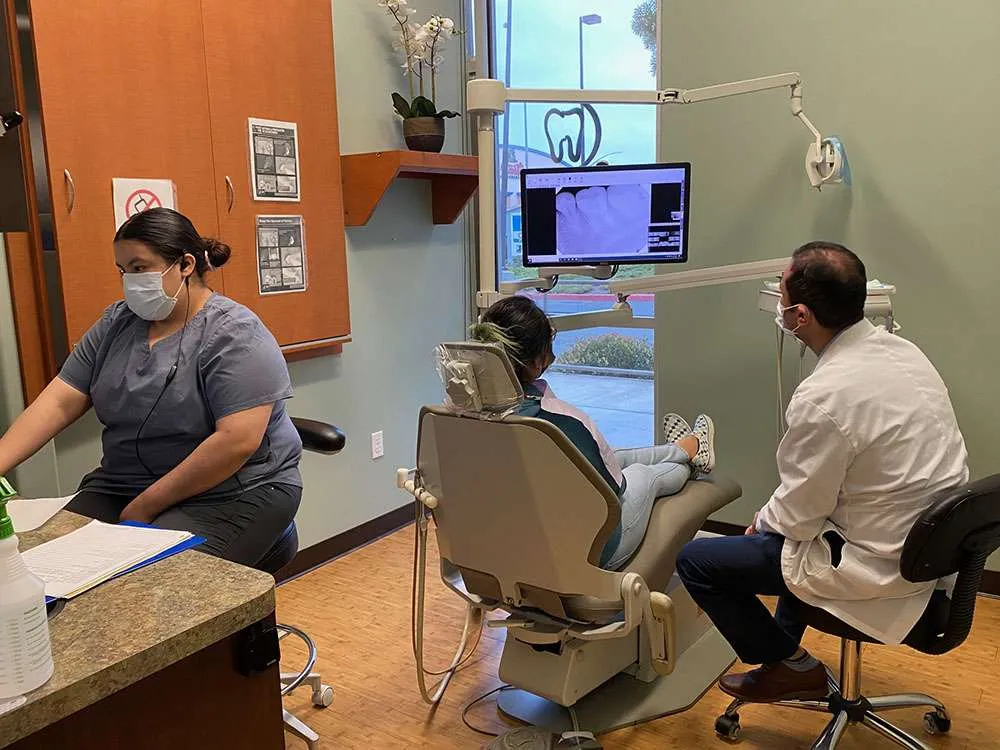
Once we’ve talked, the dental exam itself starts. We’ll look at your teeth, gums, and bite. We check for cavities, cracks, and spots where old fillings might be wearing thin. We also look at your gum tissue for redness, swelling, and pockets forming near the roots—the early signs most people never notice on their own. Patients are often surprised by something we find, usually something small and easy to manage before it turns into a bigger problem.
X-rays come next if you’re due for them. These give us a look under the surface, at bone level, where decay and infection like to hide.
Then we sit back down with you. No jargon, no rushed explanations. We walk through what we saw, what it means, and what your options are.
You should leave understanding your own mouth better than you did an hour before, not more confused. Got questions about a specific tooth that’s been nagging you? Ask. That’s what this appointment is for.
Some visits end with a cleaning scheduled for the same day. Others need a follow-up for something more involved. Either way, you’ll know exactly what’s next before you walk out.
Your first appointment is designed to be comfortable, informative, and pressure-free. Here’s what you can expect:
- A conversation about your dental concerns, goals, and health history
- A comprehensive exam of your teeth, gums, and bite
- A check for cavities, cracked teeth, worn fillings, and gum disease
- Digital X-rays (if needed) to detect problems below the surface
- A clear explanation of your oral health and treatment options
- Time to ask questions and discuss any concerns
- A same-day cleaning or a personalized treatment plan, depending on your needs
How General Dentistry Pricing Works
Let’s talk about cost, since it’s usually the first question on your mind. Dental pricing isn’t one flat number. It shifts based on what your mouth needs, and that’s true at every practice, not just ours.
Most general dentistry fees break down into a few buckets. There’s the exam and diagnostic piece: X-rays and a visual check to see what’s going on. Then there’s the actual treatment—a cleaning, a filling, a root canal, whatever the situation calls for. Some procedures need more chair time than others.
A simple cleaning takes far less time than treating gum disease that’s been building for years. More time, more materials, and more skill involved usually mean a higher cost. Insurance plays a role too.
Many plans cover preventive visits like exams and cleanings at little to no cost to you, then split the bill differently for restorative work like fillings or crowns. We'd rather you ask us directly what your plan covers than guess.
A few things tend to push cost up or down across the industry:
Severity of the Problem
Early decay is typically less expensive to treat than a deep cavity.
Treatment Needed
Costs vary depending on whether you need one procedure or multiple treatments.
Restorative Materials
Different materials offer different levels of durability and aesthetics.
Case Complexity
More complex procedures requiring additional time or precision may cost more.
Frequently Asked Questions
Frequently Asked Questions
How do I know if my toothache is an emergency or can wait?
Ask yourself three questions: Does the pain wake you up at night? Is there swelling in your cheek or jaw? Has it lasted more than two or three days? A yes to any of these means you should call today. Mild sensitivity that fades in a few seconds, or soreness after a new filling, can usually wait for your next visit. Throbbing pain with no trigger, or a bad taste that won’t go away, points to an infected nerve that needs attention fast.
What should I expect during my first dental exam?
Your first exam starts with a conversation, not a rushed poke around your mouth. We ask what brought you in and what’s bothering you before we look at your teeth, gums, and bite. We check for cavities, cracks, and worn fillings, then take X-rays if you’re due for them, since decay often hides below the surface. Afterward, we sit down and explain what we found in plain language, so you leave understanding your mouth better than when you walked in.
How fast can I get seen for a same-week dental problem in Santa Maria?
Same-week care is built into how we schedule, because dental pain rarely waits for a convenient day. We hear from Santa Maria families often after a backyard barbecue mishap on Broadway or a kid’s elbow to the mouth during a park game. Swelling, a lost filling, or a broken tooth edge are calls we plan for. Describe what you’re feeling when you call, and our team will figure out how soon you need to come in.
What are the warning signs my child needs to see a dentist?
Watch for a tooth that hurts when your child eats something cold, or a dark spot that wasn’t there a few months ago. Kids often describe pain differently than adults, so complaints about chewing on one side or avoiding certain foods are worth noticing too. Don’t wait for the problem to get louder. Catching a small cavity or crack early usually means a simpler visit instead of a bigger, more involved appointment later.
What happens if the dentist finds a problem during my exam?
If we find something during your exam, we’ll walk you through what it is and what your options are before deciding on next steps. Some visits end with a cleaning scheduled the same day, since that’s often the simplest fix. Others need a follow-up appointment to treat something like a cavity or an early gum issue we caught on X-ray. Either way, you’ll leave with a clear plan instead of unanswered questions.
Do I need X-rays at every dental visit?
Not every visit requires X-rays, but they’re an important tool when you’re due for them. X-rays let us see below the gumline and into the bone, where decay and infection often start before you feel any pain. If you had recent X-rays elsewhere, bring that information along so we can decide together whether new ones are needed. Skipping them when they’re due can let a small problem grow unnoticed for months.
Schedule Your Dental Appointment Today
Ready to get comprehensive care for your family? Visit Brilla Dental Group on North Broadway.
Visit Us
1846 N Broadway #B, Santa Maria, CA 93454
Languages
English | Español
Office Hours
Monday – Thursday: 7:30 AM – 4:30 PM
Friday: 7:30 AM – 4:00 PM
Saturday – Sunday: Closed