General Dentistry
Oral Cancer Screening in Santa Maria
Modern Care. Artistic Precision. Exceptional Comfort.
What Happens During an Oral Cancer Screening
An oral cancer screening is a quick look-and-feel check of your mouth, lips, jaw, and neck. There are no needles and no drills, and it usually takes just a few minutes during a regular exam. If a spot looks unusual, the next step is most often a second look, not bad news.
If you’ve had a dental exam before, you’ve probably had part of this screening without noticing. It’s gentle and quiet, and you just sit back and open wide. Here’s what a typical screening includes, so nothing catches you off guard.
It starts with a few questions. Your dentist will usually ask about your health history and any habits that raise risk, like tobacco use, drinking alcohol, or lots of time in the sun. If you spend long days outdoors, as many people who work the farm fields around Santa Maria do, say so. Sun on your lips matters here. Also mention any sore, lump, or tender spot you’ve noticed, even if it seems small.
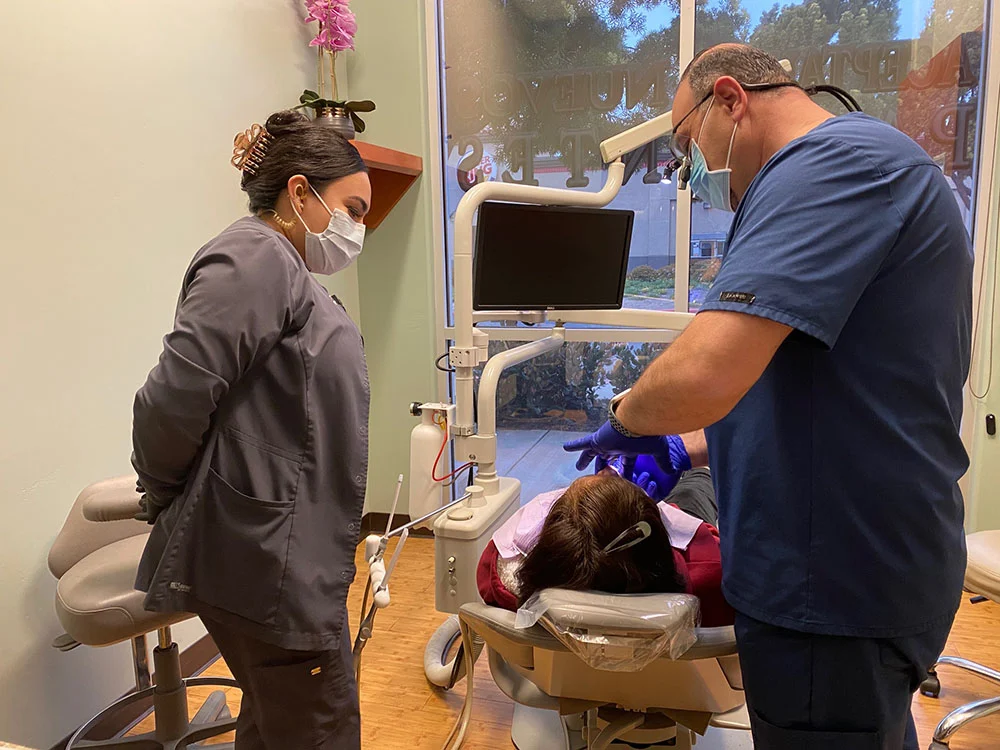
Next comes the visual check. Your dentist looks carefully at every surface inside your mouth, not just your teeth:
- Your lips, inside and out
- Your gums and the insides of your cheeks
- Your tongue, including the sides and underneath, often holding it gently with a piece of gauze to see better
- The floor of your mouth under your tongue
- The roof of your mouth and the back of your throat
They’re looking for changes in color or texture. That means white or red patches, rough spots, or sores that don’t seem to be healing.
Then comes a quick touch check. Your dentist will press lightly along your jaw, under your chin, and down the sides of your neck. This helps them feel for lumps or swelling you can’t see from inside your mouth. It feels a lot like a doctor checking your glands when you have a cold.
That’s really it. Most people are surprised by how fast it goes. There’s nothing to prepare at home. If you wear dentures or a partial, expect to take them out so the areas underneath can be seen clearly.
Sometimes your dentist does spot something worth watching, and that’s okay. Most mouth spots turn out to be harmless, like a canker sore, a cheek you bit, or a rough area from a sharp tooth edge. Often the dentist will simply want to look again after a short wait to see if it heals on its own. If a spot sticks around or looks concerning, the next step may be a small tissue sample called a biopsy. Oral pathology biopsies are one of the services we offer, and that has its own page if you’d like to learn more.
You don’t have to remember any of this to get a good screening. Knowing what happens just makes it easier to relax, ask questions, and speak up about anything you’ve noticed. Those few minutes of attention are what let small changes get caught early, while they’re simple to look into.

Signs That Should Not Wait
Most mouth spots are nothing serious. You bite your cheek, burn your tongue on hot coffee, or get a canker sore, and it heals on its own. So how do you know when a change is worth a call instead of waiting for your next cleaning? The key is whether it lingers. A normal sore gets better day by day. A change that sticks around, spreads, or keeps coming back deserves a closer look.
Call us sooner rather than later if you notice any of these:
- A sore, ulcer, or rough spot that’s still there after a normal sore would have healed
- A white or red patch on your gums, tongue, cheek, or the floor of your mouth that doesn’t wipe away
- A lump, bump, or thick spot in your cheek, on your tongue, or along your neck or jaw
- Numbness or a tingly, “asleep” feeling in your tongue, lip, or chin that has no clear cause
- Trouble chewing or swallowing, or a feeling that something is caught in your throat
- Hoarseness, a sore throat, or ear pain on one side that won’t go away
- Bleeding in your mouth that doesn’t come from brushing or flossing
- A tooth that suddenly feels loose, or dentures that stop fitting the way they used to, with no clear reason
- A spot on your lip that crusts, peels, or flakes and keeps coming back
That last one deserves extra attention if you spend long hours outside. We mentioned sun on your lips in the screening section above. A dry or scaly patch on your lower lip can be easy to brush off as chapping. If lip balm doesn’t fix it and it keeps returning, it’s worth having someone look at it.
Here’s the honest side of it, too. You don’t need to rush in for every little thing. A canker sore that’s clearly shrinking, a spot where you bit your cheek last night, or a sore under a new denture that’s easing as your mouth adjusts can usually wait. Keep an eye on it. If it’s getting better, let it heal. If it’s not, that’s your signal to call.
One easy habit helps a lot. When you notice something, snap a quick photo with your phone and jot down the date. That way you aren’t guessing whether a spot has changed. You’ll have a clear before-and-after to show your dentist, and it often makes the visit faster and more useful.
Try not to let worry keep you away. It’s normal to feel nervous about having a spot checked, and it’s tempting to wait and hope it fades. A quick look gives you an answer either way. Most of the time, that answer is relief. If it does need a closer look, catching it early keeps things simple and gives you more options.
You also don’t need to figure out what a spot is on your own. That’s our job. Your part is just noticing that something feels different and letting us know.
When Screening Is Just Routine, Not a Worry
For most people, an oral cancer screening isn’t a big event. It’s a normal part of taking care of your mouth, just like checking your gums or looking for cavities. If you feel fine and haven’t noticed anything new, there’s a good chance you don’t need anything extra at all.
Here’s the honest answer: if you already keep up with regular dental checkups and nothing in your mouth has changed, you usually don’t need to book a separate screening visit. A screening is commonly done during a routine exam. If you’re not sure yours includes one, just ask at your next checkup. That one question is all it takes.

It’s also worth knowing what doesn’t mean something is wrong. A lot of people tense up during the exam and wonder if the dentist found something. Most of the time, they’re just being thorough. These moments are normal parts of a careful check:
- Your dentist gently holds your tongue to see the sides and underneath
- They press along your jaw and neck
- They ask whether you smoke, chew tobacco, or drink alcohol
- They ask how much time you spend in the sun
- They take a second, closer look at a spot that turns out to be nothing
None of these are signs of bad news. The health questions aren’t a judgment, either. Your answers simply help your dentist know what to pay closer attention to. Being open about your habits makes the check more useful, not more scary.
You also don’t need to schedule a screening just because you read about oral cancer online or a friend had a scare. If your mouth feels normal and your next checkup is already on the calendar, it’s okay to wait for that visit. Worry alone isn’t a reason to rush in. A change you can see or feel is, and that’s what the section above covers.
Being young, healthy, or a non-smoker doesn’t mean you skip the check. It just means it’s likely to be quick and uneventful. That’s a good thing. A screening that finds nothing is exactly the result you want. It gives you a clear starting point, so any future change is easier to spot.
Some people may want to talk with their dentist about being checked more often. That can include people who use tobacco, drink heavily, have had oral cancer before, or spend long days working outside, like the sun-on-your-lips concern we mentioned earlier. Even then, more frequent checks are usually still routine. They’re about staying a step ahead, not about expecting trouble.
So if you came here feeling uneasy, take a breath. For most people, a screening is a few calm minutes during a visit they were already making. You show up, you sit back, and you leave knowing your mouth was looked after with care. That peace of mind is the whole point.
Who Should Pay Closer Attention
Anyone can get oral cancer, but some people have more reasons to keep their screenings regular and to speak up about small changes. Being in one of these groups doesn’t mean something is wrong. It just means a few calm minutes of attention are worth even more for you.
Tobacco in any form is the big one. That includes cigarettes, cigars, pipes, chewing tobacco, and snuff. If you use chew or dip, think about where you usually tuck it. That spot in your cheek or lip gets the most contact, so it’s the place your dentist will want to look at most closely. If you’ve quit, that’s a real win, and it’s still worth mentioning, since past use matters too.
Alcohol counts as well, especially when it’s paired with tobacco. The two together raise the risk more than either one alone. You don’t have to share exact numbers if that feels awkward. A simple, honest answer is enough to help your dentist know where to focus.
Some people are surprised to learn about HPV, the same virus behind many cases of cervical cancer. Certain types are linked to cancers at the back of the throat, the tonsils, and the base of the tongue. These can show up in people who’ve never smoked, including younger adults. Changes in these areas are harder to see on your own, which is why the throat-related signs we listed earlier, like one-sided ear pain or a sore throat that won’t quit, deserve a call instead of a shrug.
01
Adults as they get older, since risk tends to rise with age
02
Anyone who has had oral, head, or neck cancer before
03
People with a weakened immune system, such as those taking medicine after an organ transplant
04
People who spend long days outdoors, for the lip reasons we covered earlier
There’s one group that often slips through the cracks: people who wear full dentures. With no natural teeth left, it’s easy to think there’s no reason to see a dentist. A screening is about the soft tissue in your mouth, not your teeth. Your gums, tongue, cheeks, and the roof of your mouth still need that check. A dental visit is also a good chance to make sure your dentures fit well and aren’t rubbing anywhere they shouldn’t.
If any of this sounds like you, the next step is simple. Tell your dentist what applies to you, and ask how often they’d like to see you. That conversation shapes a plan that fits your mouth and your life, so nothing gets missed and nothing gets blown out of proportion.
How Screening Fits Into Your Exam Visit and Cost
For most people, a screening doesn’t mean a separate trip or a separate line on your bill. It’s usually folded into a regular checkup, alongside your cleaning and the rest of your exam. If you’re already due for a visit, you don’t need to plan anything extra. Just come in for your checkup and the screening comes with it.
That’s also the simplest way to think about cost. Many dental insurance plans treat routine exams as preventive care, and the screening is part of that exam. Plans vary a lot, though, so the only way to know for sure is to check your own coverage. If you don’t have insurance, ask what a routine exam costs before your visit. That price is usually your starting point.

A few things can change what you pay:
- Whether the screening happens during a routine exam or at a separate visit you book because of a new sore or lump. A problem-focused visit is often billed differently from a checkup.
- Whether your dentist uses an extra tool, like a special light or rinse, to get a closer look. Some insurance plans cover these add-ons and some don’t.
- Whether a spot needs follow-up, such as a biopsy. That’s a separate service with its own cost, and it only comes up if something needs a closer look.
- Your plan’s details, like how many exams it covers each year, your deductible, and whether the office is in your network.
None of this should catch you off guard. A good dental office will tell you before doing anything that costs extra, so you can decide with clear information. If you’d like to avoid surprises, these questions help:
- Is an oral cancer screening part of my regular exam here?
- Will any extra tools or tests be used, and are they billed separately?
- If you find something that needs follow-up, will you explain the cost before we move ahead?
- Can you check what my insurance covers before my visit?
Insurance and billing assistance is one of the services we offer. If you’re not sure what your plan covers, our team can help you sort through it so the money side doesn’t stand between you and a healthy mouth.
There’s one more reason to keep screenings tied to your regular visits. When the same team looks at your mouth over time, small changes are easier to notice. Our approach centers on explaining what we see and closely monitoring your oral health over time, so each checkup builds on the last. A screening that finds nothing still matters, because it gives us a clear picture to compare against next time.
If it’s been a while since your last checkup, that’s okay. There’s no judgment. One routine visit gets you back on track. You’ll have your exam, your screening, and an honest talk about anything you’ve noticed, all in one calm appointment.
Frequently Asked Questions
Frequently Asked Questions
Do all dentists check for oral cancer during a checkup?
Not every dentist builds a screening into each visit, so it’s worth asking. Most general dentists do include a quick look-and-feel check as part of a routine exam. If you’re not sure whether yours does, just ask at your next cleaning. It only takes a moment to confirm, and it’s a simple question that gives you peace of mind.
What is the 3 finger test for oral cancer?
The 3 finger test is a simple self-check where you use three fingers to feel under your jaw and along your neck for lumps or swelling. It’s meant as a rough at-home habit, not a replacement for a professional exam. Your dentist does a more thorough version of this during your checkup, pressing along your jaw, chin, and neck to feel for anything unusual. If you notice a lump on your own between visits, that’s a good reason to call rather than wait.
Schedule Your Dental Appointment Today
Ready to get comprehensive care for your family? Visit Brilla Dental Group on North Broadway.
Visit Us
1846 N Broadway #B, Santa Maria, CA 93454
Languages
English | Español
Office Hours
Monday – Thursday: 7:30 AM – 4:30 PM
Friday: 7:30 AM – 4:00 PM
Saturday – Sunday: Closed