General Dentistry
Dental Sealants in Santa Maria
Judgment-Free Care for Every Age
Who Needs Dental Sealants
Sealants help most on back teeth with deep grooves, ideally soon after those teeth come in and before any decay starts. Kids and teens are the classic fit, but some adults with healthy, deeply grooved molars benefit too. Teeth that already have fillings, crowns, or active cavities usually aren’t candidates.
Not every tooth needs a sealant, and not every person does either. The real question is simple: do you have healthy back teeth with grooves deep enough to trap food a toothbrush can’t reach? If so, a sealant is a quick way to close off those spots before trouble starts.
Your molars and premolars do the heavy chewing, so they’re built with pits and grooves on top. In some mouths those grooves are shallow and easy to clean. In others they’re narrow and deep, sometimes thinner than a single toothbrush bristle. That’s where cavities like to begin, even in kids who brush well.
Here’s who tends to benefit most:
- Kids getting their first permanent molars, which usually show up around age 6. Sealing them early protects them during the years when brushing habits are still forming.
- Preteens and teens getting their second molars, which tend to arrive around age 12. These teeth sit far back and are easy to miss when brushing.
- Children with deep grooves on baby molars, especially if they’ve already had a cavity. Baby teeth hold space for adult teeth, so keeping them healthy still matters.
- Adults with healthy, deeply grooved molars that have never been filled. Age alone doesn’t rule you out.
- Anyone with a higher cavity risk, such as a history of frequent cavities, dry mouth, or a diet with lots of snacking or sugary drinks.
Picture a parent who notices their 7-year-old’s new back teeth look darker in the grooves, even after brushing. That staining often just means the grooves are deep and hold onto food. It’s exactly the kind of tooth a dentist will look at closely to decide whether a sealant is a good fit.
Now for the honest part. Sealants aren’t the right choice for everyone, and we’d rather tell you that up front.
- Teeth that already have a filling or crown on the chewing surface. The groove is already covered.
- Teeth with an active cavity. Decay needs to be treated first, usually with a filling, before anything else.
- Back teeth with shallow, smooth grooves that clean easily. There’s little for a sealant to protect.
- Front teeth. They don’t have the deep chewing grooves that sealants are made for.
If your teeth fall into one of those groups, good brushing, flossing, and regular checkups may be all you need. For some patients, a fluoride treatment can add extra protection to the smooth surfaces that sealants don’t cover. The two often work well side by side.
At Brilla Dental Group, our dentists take time to explain what they see in your mouth and talk through your options, so you can decide with clear information instead of guesswork. Whether sealants make sense comes down to your own teeth, not a blanket rule for your age group.
SEALANT MAY NOT BE THE RIGHT CHOICE IF:
- The tooth is only partway in. When gum tissue still covers part of the chewing surface, the tooth is hard to keep dry, and a sealant placed too early may not hold. Waiting a few months until the tooth is fully up often gives a better, longer-lasting result.
- The trouble is between the teeth, not on top. A sealant covers the grooves on the chewing surface. It does nothing for the tight spots where two teeth touch. If decay is starting there, it needs its own treatment, and daily flossing becomes the real protection.
- The tooth is cracked or badly worn. A sealant is a thin coating, not a repair. A tooth with a crack or heavy wear may need more support, such as a dental crown, to stay strong for chewing.
- The tooth already has a sealant that's still in good shape. There's no reason to redo work that's holding up. A dentist will check it at each visit and only suggest a touch-up if part of it has worn away.
- Your child can't stay still long enough yet. Placing a sealant means keeping the tooth dry for a short stretch. For a very young child who's nervous or wiggly, it can make sense to wait and try again later rather than rush a result that won't last.

When a Tooth Is Not a Sealant Candidate
Sometimes the answer isn’t “no.” It’s “not yet” or “this tooth needs something else.” Those answers can feel confusing when you came in expecting a quick sealant, so here’s what’s usually going on.
A sealant only works if it bonds tightly to a clean, dry tooth. Anything that gets in the way of that bond, or any problem the sealant can’t reach, changes the plan.
There’s also the gray zone. A groove might look dark, and it isn’t always clear at first glance whether that’s just a stain or the start of decay. In that case, a dentist looks closely before deciding, and may use digital x-rays to check what’s happening beneath the surface. If it’s only a stain, a sealant may still be a good choice. If it’s decay, that comes first.
Think of a 6-year-old whose new molar is just peeking through the gums. The tooth looks like it’s in, but part of the top is still tucked under tissue. Sealing it now could mean a coating that peels off in a few months. Rechecking it at the next visit, once the whole surface shows, usually makes more sense.
Waiting on a sealant isn’t the same as leaving a tooth unprotected. Brushing twice a day, flossing, limiting sugary drinks between meals, and keeping regular checkups all protect the tooth while it finishes coming in.
If dental visits are hard for you or your child, that’s worth mentioning when you book. Brilla Dental Group offers anxiety and phobia conscious care, and talking about it ahead of time can make the next visit feel easier.
The goal is a sealant that bonds well and lasts. That depends on choosing the right tooth at the right time. A rushed sealant that peels off won’t protect anyone.
How Candidacy Gets Confirmed During a Routine Exam
You don’t need a special appointment to find out if sealants make sense. The answer usually comes out of a regular checkup and cleaning. The dentist is already looking closely at every tooth, so the back teeth get a careful look as part of that visit.
Here’s what that look usually involves, step by step.
01
A few questions first. Expect questions about past cavities, snacking habits, and how often brushing really happens. These answers help show how much risk each tooth faces, using the risk factors covered above.
02
A clean, dry tooth. After the cleaning, the dentist dries the chewing surface with a gentle puff of air. Grooves are much easier to read once plaque and moisture are out of the way.
03
A close look at the grooves. The dentist checks how deep and narrow each groove is and whether it holds onto stain or food. A light touch with a small instrument along the groove can show whether the surface feels firm and healthy.
04
A check on how far the tooth has come in. If gum tissue still covers part of the top, the tooth may land in the not-yet group described earlier.
05
A look beneath the surface when needed. If a dark groove raises questions, digital x-rays can help sort stain from decay before anything gets sealed.
Each tooth then gets one of three answers. It’s ready to seal, it should be rechecked at a later visit, or it needs treatment first. One child can get all three answers in the same mouth. A fully erupted first molar might be ready today, while a second molar that’s barely through the gums waits for another visit.
Whether the sealant goes on that same day or at a follow-up depends on timing, how the tooth looks, and how your child is doing in the chair. Some kids are relaxed and ready. Others have had enough after the cleaning, and a short separate visit gives a better result.
Records matter here too. Comparing what a groove looks like now with how it looked at the last visit helps show whether a stain is staying put or changing. That’s one reason Brilla Dental Group closely monitors patients’ oral health over time instead of judging a tooth from a single snapshot.
Good questions to ask at the checkup: Which teeth have grooves deep enough to seal? Are any teeth too new to seal yet? Is that dark spot a stain or something more? When should we look at the next molars coming in?
If cost is on your mind, ask before the visit. Many dental plans treat sealants differently depending on age and which tooth is sealed, so it helps to know ahead of time. Our team offers insurance and billing assistance and can help you understand what your plan may cover.
The point of all this checking is simple. Sealants protect best when they go on the right tooth at the right moment, and a careful exam is how you find that moment.
What Happens During Sealant Placement
Good news first. Getting a sealant is one of the easiest things that happens in a dental chair. There’s usually no numbing, no drilling, and no shots. Most kids find it easier than the cleaning that came before it. Each tooth usually takes only a few minutes, and the whole visit is often short.
Every step has one goal: a tight bond between the sealant and the tooth. That’s why the work goes slowly and carefully, even though it’s simple.
Here’s what generally happens, tooth by tooth:
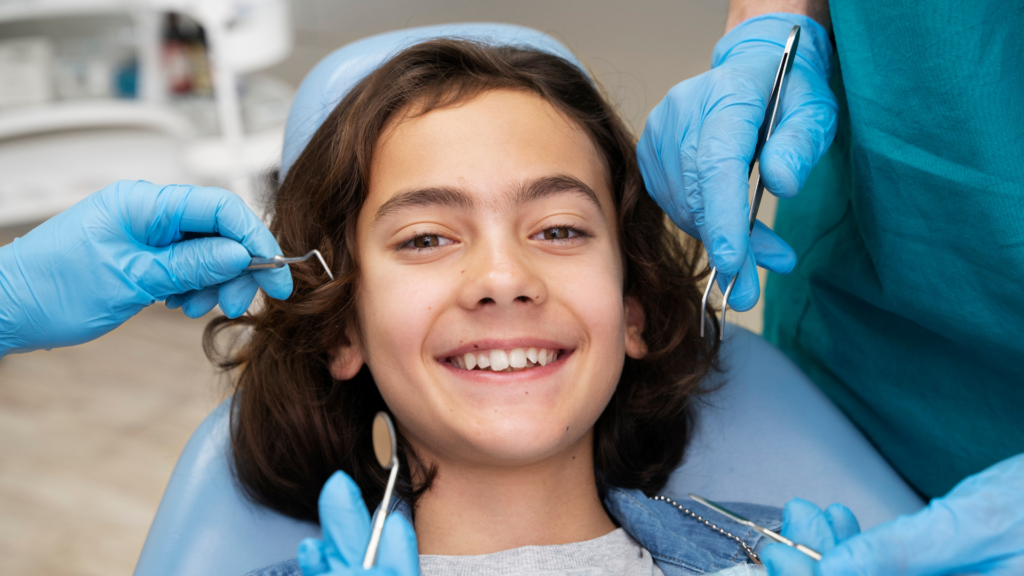
- Cleaning the grooves. The chewing surface gets polished so no plaque or bits of food are left in the grooves. Anything trapped under a sealant would weaken the bond.
- Keeping the tooth dry. Cotton rolls or a small shield go around the tooth to hold back saliva and the tongue. Dryness is the step that matters most, so this part gets real attention.
- Preparing the surface. A mild gel goes on the grooves for a short time. It makes the surface a little rough on a tiny level, so the sealant has something to grip. It may taste a bit sour, but it doesn’t hurt.
- Rinsing and drying again. The gel gets rinsed off and the tooth gets dried once more. A properly prepared tooth often looks slightly chalky. That’s normal and means it’s ready.
- Painting on the sealant. The sealant is a thin liquid that flows down into the pits and grooves. It’s brushed on carefully so it fills the deep spots without spilling onto the sides of the tooth.
- Hardening with a light. A small blue light shines on the tooth for several seconds. The light turns the liquid into a firm, smooth coating.
- Checking the bite. The dentist checks that the sealant is fully hard and well attached. Your child bites down to make sure the tooth doesn’t feel too high. If a spot feels off, it can be smoothed right away.
What will your child feel? Mostly a little pressure, a puff of air, and the taste of the gel. Some kids say the new sealant feels strange to their tongue at first, almost like a smooth bump. That feeling usually fades within a day or two as they get used to it.
There’s usually no recovery time. Your child can eat, drink, and head back to school or play right after. The sealant is hard as soon as the light is done.
Picture a 7-year-old who’s nervous because a friend said dentists use needles. They sit down, hear the dentist count through each step, feel some air and a cotton roll, and see the little blue light. A few minutes later, they’re done and asking if they can see the tooth in a mirror. For many families, that short, easy visit makes the next checkup feel a lot less scary.
If your child gets anxious at the dentist, tell our team when you book. Brilla Dental Group offers anxiety and phobia conscious care, and knowing ahead of time helps us plan a calmer visit.
The steps are simple, but the care behind them is what makes a sealant last. A clean, dry, well-prepared tooth gets a sealant that holds through years of chewing. A rushed one may chip or peel early, and that’s the very problem the careful exam and timing are meant to prevent.
here's what helps a sealant last:
- Brush twice a day with fluoride toothpaste, getting all the way to the back molars where sealants usually sit.
- Floss once a day. Sealants don't cover the tight spots where teeth touch.
- Go easy on sugary drinks and sticky snacks between meals. A sealed groove is protected, but the rest of the tooth isn't.
- Skip chewing ice, hard candy, pens, or fingernails. Hard, repeated pressure can chip a sealant.
- Don't use teeth as tools to open bags or bottle caps.

Keeping Sealants Working Over Time
A sealant isn’t something you put on once and forget. It’s a durable coating, and with a little attention it can protect a tooth for many years. Most of that care happens at home, and the rest happens at regular checkups.
Sealants guard the grooves on top of the tooth. The sides of the tooth and the spaces between teeth are still open to plaque, so brushing and flossing matter just as much as before. Think of a sealant as one layer of protection, not the whole plan.
Teeth grinding is worth a mention too. If your child grinds at night, or you wake up with a sore jaw, tell the dentist. Grinding wears down chewing surfaces, and that includes sealants.
Even with great habits, sealants slowly wear from everyday chewing. A small edge might chip, or a thin spot might wear through. You can’t always see it at home, but there are a few clues:
- The tooth feels rough or sharp to the tongue in a spot that used to feel smooth.
- Food starts catching in a back tooth again.
- Your child mentions that something feels different on a molar.
None of these is an emergency. They’re simply worth bringing up at the next visit, or sooner if the tooth hurts or feels sensitive.
Regular checkups are where sealants really earn their keep. At each visit the dentist looks at every sealed tooth and checks that the coating is still covering the grooves. If a part has worn away, a touch-up is usually quick and simple. The worn area is cleaned and more sealant is added. There’s often no need to start over or remove the whole thing. Catching a small gap early means the groove never sits open long enough for decay to start.
Picture a 10-year-old whose first molars were sealed at age 7. At a routine visit, one sealant looks a little thin at the edge. A few minutes of touch-up work and the tooth is fully protected again, long before a cavity has a chance to form. That’s the whole idea behind sealants: the right tooth, sealed at the right time, then watched over the years so the protection stays complete.
Sealants also tie into timing as kids grow. Second molars usually come in around age 12, so the checkups that track existing sealants are also the visits that spot the next teeth ready to be sealed.
Frequently Asked Questions
Frequently Asked Questions
Are dental sealants still commonly used, or has treatment moved on?
Yes, dentists still place sealants regularly because they remain one of the simplest ways to protect deep grooves on back teeth. They work by sealing off the pits where a toothbrush bristle can’t always reach. For kids getting their first and second molars, sealants are still a standard part of preventive care.
Are there any downsides to getting dental sealants?
The main downside is that sealants only protect the chewing surface, not the sides of a tooth or the spaces between teeth. Flossing is still needed to protect those areas. Sealants can also wear down over time, so they need to be checked at regular visits and touched up if a spot thins out.
Why do some dental insurance plans not fully cover sealants?
Many plans limit sealant coverage based on your age or which specific tooth is being sealed, since they’re often treated as a preventive extra rather than a required treatment. Coverage can also depend on whether the tooth already shows signs of risk. It’s worth asking your plan ahead of your visit so you know what to expect.
Schedule Your Dental Appointment Today
Ready to get comprehensive care for your family? Visit Brilla Dental Group on North Broadway.
Visit Us
1846 N Broadway #B, Santa Maria, CA 93454
Languages
English | Español
Office Hours
Monday – Thursday: 7:30 AM – 4:30 PM
Friday: 7:30 AM – 4:00 PM
Saturday – Sunday: Closed