Services
Dental Clinic in
Santa Maria
Judgment-Free Care for Every Age
Know Whether Your Dental Problem Can Wait
Pain that won’t settle, swelling, a knocked-out tooth, or a broken tooth that hurts all call for a same-day phone call. A lost filling or a small chip with no pain should be booked soon, but it isn’t an emergency. Mild, short-lived sensitivity or a cosmetic concern can usually wait for your next regular visit.
When something feels wrong in your mouth, the first question is usually simple: do I need to be seen today? Most dental problems fall into one of three groups. Knowing which group yours is in can save you a sleepless night or a rushed trip you didn’t need.
Call us the same day if you notice any of these:
- A toothache that keeps getting worse, throbs, or keeps you awake
- Swelling in your gums, jaw, or face, or a pimple-like bump on the gum near a sore tooth
- A tooth that's been knocked out or pushed out of place
- A cracked or broken tooth that hurts when you bite or breathe in
- Bleeding that doesn't stop after an injury to your mouth

These are the problems our emergency services are built for. Our service list includes same-day emergency appointments, emergency exams, toothache treatment, abscess drainage, knocked-out tooth care, and emergency extractions when a tooth can’t be saved. Swelling deserves extra attention. It can mean an infection, and infections don’t clear up on their own.
Book soon, within the next few days, for problems that are annoying but stable:
- A filling or crown that fell out, with little or no pain
- A small chip on the edge of a tooth that doesn't hurt
- Gums that bleed when you brush or floss
- A dull ache that comes and goes but isn't getting worse
None of these needs a midnight phone call, but they shouldn’t sit for months either. A lost crown or filling leaves the tooth underneath more exposed. We can place a temporary restoration to protect it while the lasting repair is planned. Bleeding gums are often an early sign of gum trouble. That’s much easier to handle with a cleaning now than with deeper treatment later.
Here’s the honest part. Some things really can wait for your next routine exam. A quick zing of sensitivity from ice cream that’s gone in a second, a tooth you’d like whiter, a small gap that bothers you in photos, or a question about straightening your teeth isn’t urgent. Write it down and bring it up at your next check-up. If the sensitivity starts to linger or gets sharper, it moves up to the book soon group.
Not sure where your problem fits? That’s normal, and you don’t have to figure it out alone. Describe what you’re feeling, when it started, and whether anything makes it better or worse. That’s enough for our team to help you decide. If it’s urgent, the emergency visit and the long-term fix can happen under one roof. The same team that calms the pain today can plan a crown, implant, or restoration built to last, so you’re not starting over somewhere new.
These are the services on our list that can be part of getting started with us:
- A new patient consultation to talk about your health history and what's on your mind
- A routine exam of your teeth, gums, and bite
- Digital x-rays, which show what's happening between teeth and below the gumline
- An oral cancer screening
- A TMJ/TMD evaluation if your jaw clicks, aches, or feels tight
- A dental cleaning, or a talk about a deeper cleaning if your gums need more care first
What Happens at a First Visit
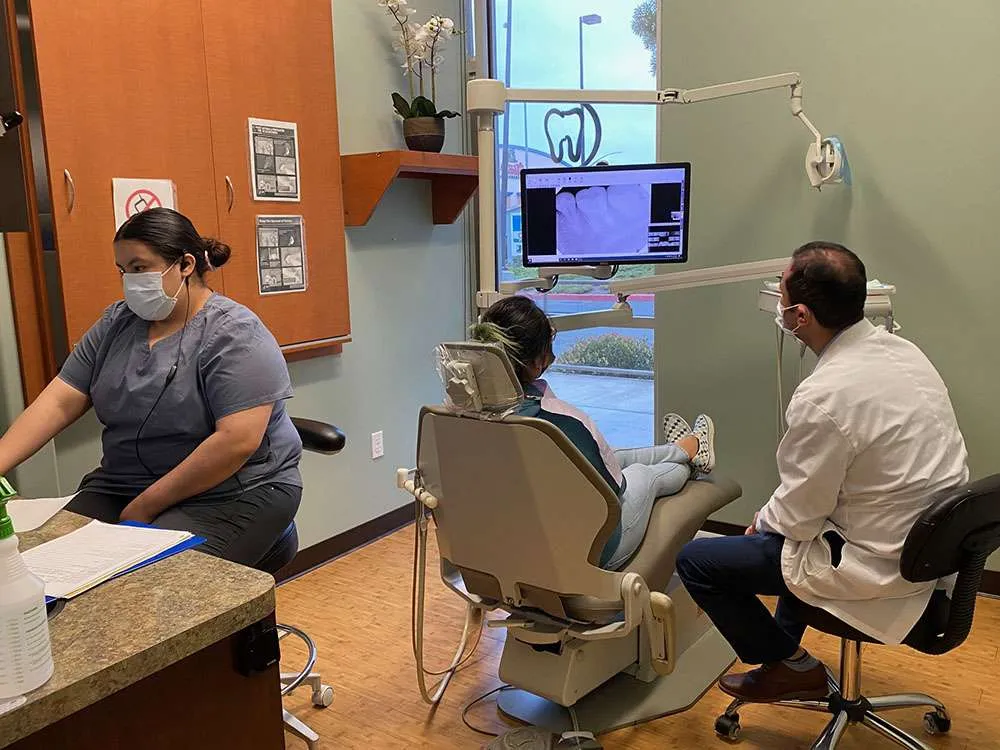
If it’s been a few years since you sat in a dental chair, the first visit is often the one people put off the longest. That’s understandable. It helps to know what the visit is really for. It’s a chance to learn about your mouth and about you, so any care that comes next fits your teeth, your goals, and your comfort level. Nobody’s there to scold you about the last time you flossed.
Most first visits at a general dental office cover the same basic ground: a conversation, a careful look, and a plan.
The talking part matters as much as the exam. Our dentists take time to understand your concerns, explain what’s going on in your mouth, and walk through your treatment options so you can make an informed choice. You won’t leave with a decision made for you. You’ll leave knowing what you’re looking at and why it matters.
That first look also becomes your starting point. Our team keeps a close eye on your oral health over time, so a small change at a later check-up is easier to spot and easier to handle.
Your first visit is also the right time to mention cosmetic wishes, like whiter teeth or a chipped front tooth. General, restorative, and cosmetic care all happen in one practice, so your plan can weigh how your smile looks and how well it works. A smile should look great and hold up to everyday chewing, coffee, and life.
A few things make the visit smoother:
- Your dental insurance card, if you have one. Insurance and billing assistance is one of our listed services, so ask if you're unsure what your plan covers.
- A list of the medicines and supplements you take
- Any recent x-rays or records from a past dentist, if you can get them
- Your questions, written down so you don't forget them in the chair
If dental visits make you anxious, say so when you book. Anxiety/phobia conscious care is part of what we offer, and telling us ahead of time helps us plan a visit that feels calmer for you. If you’d rather talk before coming in at all, virtual dental consultations are on our service list too.
One Clinic for Routine, Cosmetic, Restorative, and Urgent Care
Your mouth isn’t a set of separate parts. Your teeth, gums, bite, and jaw all work together. A choice in one area often changes what makes sense in the next. When one team can see the whole picture, each step can set up the next one instead of getting in its way.
Here’s a simple example. Say you’re missing a back tooth and you’d also like brighter front teeth. Crowns and implant crowns don’t whiten the way natural teeth do, so the order matters. Whitening first lets the new tooth be matched to your brighter shade, keeping your smile in harmony. Gums are another example. Veneers and implants last best on healthy gums. Treating gum disease first gives that work a strong base to sit on.
These are the kinds of care on our service list, all in one Santa Maria practice:
Routine and preventive care
including exams, cleanings, fluoride treatment, dental sealants, and periodontal maintenance
Gum care
including scaling and root planing, laser gum surgery, pocket reduction surgery, and gum graft surgery
Restorative care
including crowns, bridges, complete and partial dentures, implant placement, bone grafting, sinus lifts, implant-supported restorations, and full-mouth reconstruction
Cosmetic care
including teeth whitening, dental bonding, composite and porcelain veneers, gum contouring, and smile makeovers
Orthodontic care
including traditional metal braces, clear aligners, retainers, and palatal expanders
Other care
including TMJ/TMD therapy, sleep apnea evaluation, wisdom tooth extractions, and frenectomy
This setup helps families, too. A child might need sealants, a parent might be thinking about clear aligners, and a grandparent might need new dentures. Everyone’s records and care plans live in one place, with one team that knows the family’s history.
Our team stays current with modern dental technology, including laser techniques for gum therapy and newer approaches in implant dentistry. On the cosmetic side, we blend dental science with an artistic eye. The goal is a smile that looks natural and is strong enough for daily chewing, morning coffee, and years of use. A crown or veneer shouldn’t just fill a space. It should be shaped to fit your face, your bite, and the teeth beside it.
You don’t need a big plan to come see us, though. A cleaning or a check-up is a fine reason on its own. If you never want more than that, that’s your call. Having the rest of this care nearby simply means that if something changes later, like a cracked tooth, a missing tooth, or a wish for a brighter smile, you won’t have to start over with strangers. The team that already knows your mouth can help you weigh your options and plan care suited to you.
How Dental Pricing Works Before You Commit
Money is one of the biggest reasons people put off dental care. Much of that worry comes from not knowing how dental bills are put together. Once you see how pricing works, it’s easier to plan ahead and say yes with confidence instead of crossing your fingers.
Most dental offices don’t charge one flat fee for fixing your teeth. Each step has its own line on the bill. An exam, a set of x-rays, a cleaning, a filling, and a crown are all priced separately. That’s why two people with the same problem can get different totals. One might need just a filling, while the other needs a crown plus some gum care first.
Insurance adds another layer. Many dental plans cover preventive care, like exams and cleanings, more fully than larger work. Most have a yearly maximum, a deductible, and sometimes waiting periods for major treatment. Purely cosmetic work, like whitening, often isn’t covered at all. Every plan is different, so the details of yours matter more than any general rule.
Here’s a helpful tip. If you need more than one treatment and nothing is urgent, you can sometimes spread the work out over time. Some people split it across two plan years to make better use of their benefits. Your dentist can tell you which steps can safely wait and which ones shouldn’t.
Several things can move the cost up or down:
- The material. Porcelain and composite (tooth-colored resin) differ in cost, look, and how long they tend to last.
- How many teeth are involved. One veneer and a full smile makeover are very different plans.
- Extra steps before the main treatment. An implant might first need bone grafting or a sinus lift if the bone is thin.
- Lab work. Crowns, bridges, veneers, and dentures are often custom-made, and that crafting is part of the cost.
- Timing. A small problem caught early usually costs less to fix than the same problem left to grow.
Before you agree to any treatment plan, it’s fair to ask:
- Can I get a written estimate that lists each step?
- Which parts are likely covered by my insurance, and which aren't?
- Is there more than one option, such as a different material or a staged plan?
- What happens if I wait, and how soon does this really need to be done?
- Could anything come up during treatment that would change the cost?
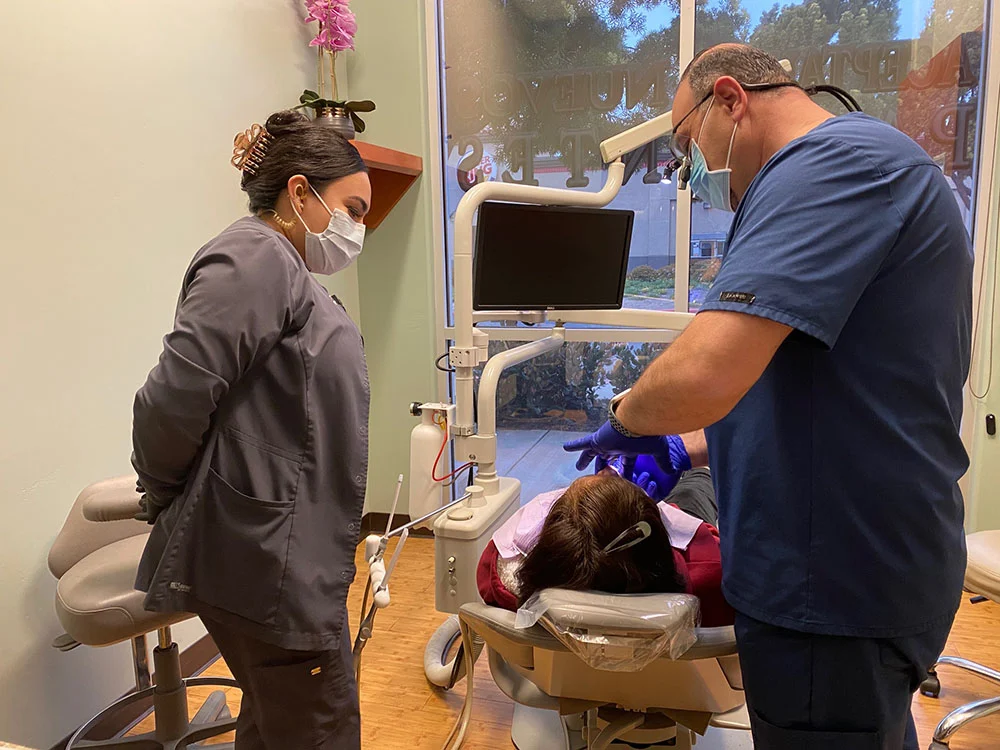
A good dental team welcomes these questions. Our dentists explain your condition and walk through your options so you can make an informed choice, and cost is part of that choice. Insurance and billing assistance is one of our listed services, so if you’re not sure what your plan covers, bring your card and ask. You should understand both the care and the cost before anything begins.
Think of regular check-ups as small course corrections. They catch the kinds of things you can’t see or feel yourself:
- Decay starting between teeth or under the edge of an old filling, which digital x-rays can show before it reaches the nerve
- Worn or loose edges on crowns and fillings that could let bacteria sneak underneath
- Hardened tartar along the gumline, which brushing and flossing can't remove but a professional cleaning can
- Early changes in your gums, bite, or soft tissues that are easier to handle when they're small
Ongoing Care That Keeps Problems From Becoming Emergencies
Most dental emergencies don’t start as emergencies. A toothache that wakes you at 2 a.m. usually began months earlier as something quiet. It might have been a tiny cavity between two teeth, a hairline crack, or a gum pocket slowly getting deeper. Early on, these problems rarely hurt. By the time they do, the fix is often bigger. That’s why steady, ongoing care is the best way to keep your smile out of the emergency group.
Because our team keeps a close eye on your oral health over time, each visit gets compared to the last. A shadow on an x-ray or a slightly deeper gum reading means more when someone knows what your mouth looked like a year ago.
The other half happens at home. Oral hygiene instructions and oral health counseling are part of what we offer. That means we can show you what to focus on for your own mouth. Maybe it’s a tricky spot behind a bridge, flossing around an implant, or a brushing angle that misses your back molars. A few small changes in your daily habits can matter more than any single visit.
The other half happens at home. Oral hygiene instructions and oral health counseling are part of what we offer. That means we can show you what to focus on for your own mouth. Maybe it’s a tricky spot behind a bridge, flossing around an implant, or a brushing angle that misses your back molars. A few small changes in your daily habits can matter more than any single visit.
How often should you come in? It depends on you. Someone with healthy gums and few fillings may need less frequent visits than someone managing gum disease or a lot of past dental work. Your dentist should set that schedule based on what they see in your mouth, not a one-size-fits-all rule.
Here’s a simple sign worth noticing between visits: food that keeps catching in the same spot. It can mean a small gap, a worn filling, or early decay. It isn’t urgent, but it’s worth mentioning at your next check-up, before it becomes the kind of problem that can’t wait.
If your mouth is healthy, ongoing care may simply mean regular exams and cleanings, and that’s a great place to be. The goal is a smile that stays strong for years, with fewer surprises along the way.
Prevention isn’t the same for everyone. Several services on our list protect against specific risks:
- Dental sealants coat the deep grooves on back teeth, where kids often get their first cavities
- Fluoride treatment helps strengthen enamel, especially for people prone to decay
- Periodontal maintenance keeps gums stable after a deep cleaning, so gum disease doesn't quietly return
- Retainers hold teeth in place after braces or clear aligners, protecting the work you already invested in
- TMJ/TMD therapy can help when clenching or jaw strain puts extra stress on your teeth
Frequently Asked Questions
Frequently Asked Questions
What does a dental appointment usually include, and why do costs vary so much?
A dental appointment’s cost depends on what it involves, since each step like an exam, x-rays, or a cleaning is priced separately. A simple check-up costs less than a visit needing a filling or crown. Material choice, how many teeth are involved, and any lab work also change the total. Ask for a written estimate that lists each step so you know what you’re paying for before you agree to treatment.
I've heard of a '3-3-3 rule' for dental care. What should I ask about my own routine?
Rather than follow a fixed rule, ask your dentist how often you personally need cleanings and check-ups, since that depends on your gums, your fillings, and your risk of decay. Someone with healthy gums and few fillings may need fewer visits than someone managing gum disease. Your dentist should set your schedule based on what they see in your mouth, not a generic timeline.
Will my dental insurance cover the work I need?
It depends on your specific plan, but most dental insurance covers preventive care like exams and cleanings more fully than bigger procedures like crowns or implants. Plans often have a yearly maximum, a deductible, and sometimes a waiting period before major treatment is covered. Purely cosmetic work, like whitening, usually isn’t covered at all. Bring your insurance card to your visit so you can ask exactly what applies to your plan.
Schedule Your Dental Appointment Today
Ready to get comprehensive care for your family? Visit Brilla Dental Group on North Broadway.
Visit Us
1846 N Broadway #B, Santa Maria, CA 93454
Languages
English | Español
Office Hours
Monday – Thursday: 7:30 AM – 4:30 PM
Friday: 7:30 AM – 4:00 PM
Saturday – Sunday: Closed